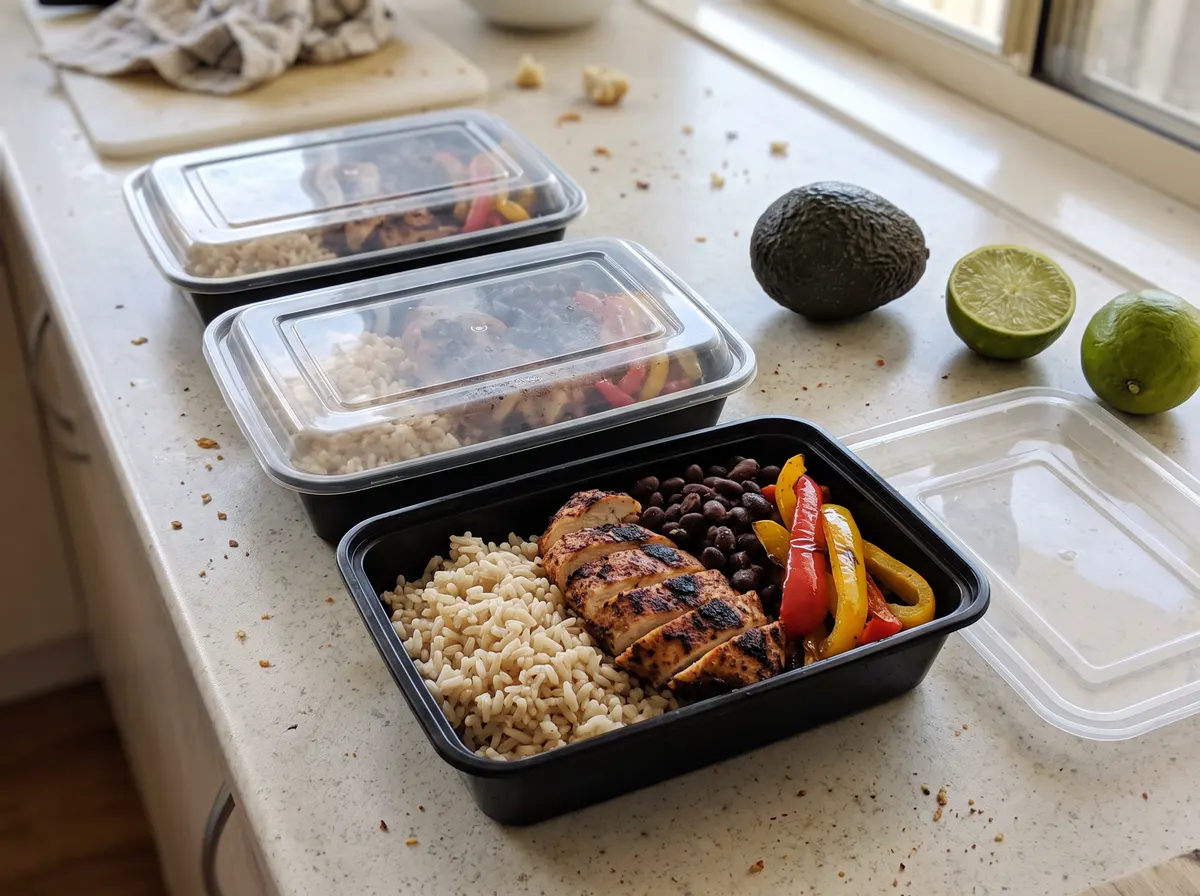
What meal prep is really like after the first week
The first Sunday feels amazing. Then Wednesday turns up. Here is the honest version of meal prep, the bits that go wrong, and the small fixes that make it stick.
Week one of meal prep is a high. You spend a Sunday afternoon in the kitchen with a podcast on, you line up ten containers like a tiny army, and you take a photo of the fridge because it has genuinely never looked this good. Monday lunch tastes like victory.
Then Wednesday happens.
By Wednesday the novelty has worn off, the chicken is the same chicken it was on Monday, and a colleague is ordering dumplings. By Thursday you're eating the last container standing over the sink and wondering why you bothered. Plenty of people quit right here, and that's a shame, because the problem usually isn't meal prep. It's how the first week was set up.
The three ways week one goes wrong
Too ambitious
The classic first attempt is five different recipes, all from scratch, all on the same afternoon. Four hours later the kitchen looks like a crime scene and you've vowed never again. The people who stick with it almost always start smaller: two or three recipes, cooked at the same time, with a shopping list that fits in one trip.
Too much of the same thing
Ten identical containers of chicken, rice and broccoli is a fitness meme for a reason. It works on paper and falls apart by day three. You don't need a different meal every day, but you do need a little variety. Two lunches and two dinners across a week is plenty to stop the boredom without doubling the work.
Food that doesn't hold up
Some meals are built for the fridge and some aren't. Curries, chillis, soups, stews and traybakes often taste better on day three than day one. Crispy things go soft, dressed salads go limp and rice dishes need care. A lot of "I hate meal prep" is really "I picked recipes that don't keep".
What actually makes it stick
The goal isn't a perfect week. It's a week where most of your meals are sorted before you're hungry.
Plan around how long food keeps. Eat the meals that keep the shortest time first and save the hardy ones for later in the week. If something needs to last longer, freeze a few portions on prep day and move them to the fridge the night before.
Keep the fresh bits separate. Avocado, dressings, herbs, crunchy toppings and anything zingy go in on the day. It takes thirty seconds and makes a Thursday lunch taste like it was made that morning.
Cook in parallel, not in sequence. The oven, the hob and the rice cooker can all work at once. Chop everything first, get the long cooks going, then do the quick stuff while they bubble away. That alone can turn a four hour Sunday into a ninety minute one.
Give yourself a night off. If you prep for five days, you've still got the weekend for takeaway, dinner with mates or whatever your fridge is hiding. Meal prep works best as a rhythm, not a rule.
The bit nobody tells you
The real win isn't the food. It's the decision you no longer have to make. At 12.30pm on a busy day, "what should I eat?" is a surprisingly expensive question. When the answer is already in your bag, you skip the queue, the impulse spend and the 3pm slump that comes from eating whatever was closest.
That's why people who stick with meal prep talk about it like a habit rather than a diet. Once a couple of weeks go smoothly, it stops feeling like effort and starts feeling like the default.
A gentle way to start
- Pick two recipes you'd happily eat three times each.
- Shop once, with a list rounded to real pack sizes so nothing goes to waste.
- Cook both at the same time, then cool, pack and label by day.
- Keep one meal free in the week, on purpose.
If planning is the part you can't be bothered with, that's exactly what Prep Buddy does. Tell it your budget, your diet and how hungry you get, and it picks recipes that hold up, costs every meal and lays out your prep day so the oven and the hob work together.
Week one might still feel like a high. The trick is making week three feel normal.